
10 Outdoor Kitchen Ideas for South Jersey Backyards
Outdoor kitchens have become one of the most popular backyard upgrades for South Jersey homeowners, and it is easy to see why. The region's outdoor living season stretches from April through November, giving you roughly eight months of usable cooking and entertaining time. According to the National Association of Realtors, outdoor kitchens return 100-200% of their cost in added home value, making them one of the highest-ROI outdoor improvements available.
But designing an outdoor kitchen in New Jersey requires more than picking out a grill. Freeze-thaw cycles, summer humidity, coastal salt air in Atlantic and Cape May counties, and Gloucester County's clay-heavy soils all affect material selection, drainage planning, and structural decisions. The ideas below are specifically tailored to South Jersey conditions, drawing from projects we have completed across the region over the past seven years.
1. Built-In Grill Station
A built-in grill station is the entry point for most outdoor kitchen projects and the most cost-effective option for homeowners who want to upgrade from a freestanding grill. The typical setup includes a built-in gas grill (36 to 42 inches), a small section of counter space on each side, and storage underneath for propane tanks or grilling accessories.
For South Jersey installations, we recommend granite or quartz countertops rated for outdoor use. These materials handle the freeze-thaw cycling that occurs from November through March without cracking or delaminating. Avoid marble and certain limestones, which are porous and tend to stain and deteriorate in humid summer conditions. A well-built grill station on a paver base typically costs between $5,000 and $12,000 installed, depending on the grill brand and countertop material.
The base structure should be built with concrete block and stone veneer, not wood framing. Wood rots quickly in New Jersey humidity, while block construction lasts decades with minimal maintenance. Make sure your contractor installs proper drainage behind the unit to prevent water from pooling against the foundation during heavy rains, which are common from May through September in this region.
2. Full Outdoor Kitchen With Appliances
A full outdoor kitchen goes beyond the grill and includes a refrigerator, sink with running water, side burner, and storage drawers. This setup allows you to prep, cook, and serve an entire meal without going inside. For families who entertain frequently, it eliminates the constant back-and-forth through the house during summer gatherings.
In Gloucester County and the surrounding area, a complete outdoor kitchen with plumbing and electrical typically runs between $20,000 and $50,000. The cost varies based on appliance selection, countertop material, the size of the cooking area, and whether you need a new gas line run from the house. Stainless steel appliances rated for outdoor use are mandatory in New Jersey's climate. Indoor-rated appliances will rust within one to two seasons.
Plumbing is one area where many homeowners underestimate the complexity. In South Jersey, outdoor water lines must be designed for winter draining to prevent frozen pipes. Your plumber should install a dedicated shutoff valve and pitch the lines so they drain completely when you winterize in late October or November.
3. Wood-Fired Pizza Oven
Pizza ovens have surged in popularity across New Jersey, and they pair naturally with an outdoor living space. A built-in wood-fired oven reaches temperatures of 700 to 900 degrees Fahrenheit, cooking a pizza in 60 to 90 seconds while also handling bread, roasted vegetables, and slow-cooked meats.
There are two main categories: prefabricated oven kits and fully custom-built ovens. Prefab kits from manufacturers like Forno Bravo or Chicago Brick Oven range from $3,000 to $8,000 for the oven unit alone, plus $2,000 to $5,000 for the base, surround, and installation. Fully custom brick ovens can cost $15,000 to $25,000 but offer unlimited design flexibility and typically last 30+ years.
For South Jersey, the oven should be built on a reinforced concrete pad with a proper chimney that meets local code. Gloucester County requires a building permit for any permanent outdoor structure with a chimney, so plan for the permitting process, which typically takes two to four weeks. The oven itself should be covered with a weather-resistant cap or integrated under a roof structure to protect the refractory lining from rain and freeze-thaw damage.
4. Outdoor Bar and Entertaining Area
An outdoor bar creates a natural gathering point separate from the cooking area, giving your guests a place to sit, drink, and socialize while the cook works. The most common configuration is an L-shaped or straight bar with three to five bar stools, a countertop overhang for seating, and an under-counter beverage refrigerator.
Natural stone and cultured stone veneers are the most popular choices for bar facades in this area. Pennsylvania bluestone and Bucks County fieldstone both work well and complement the colonial and farmhouse architectural styles common across Gloucester, Camden, and Salem counties. The countertop should overhang the base by 12 to 15 inches on the seating side to provide comfortable knee clearance.
Budget approximately $8,000 to $18,000 for a dedicated bar area with seating for four, a beverage fridge, and stone veneer construction. Adding a built-in ice maker or kegerator will increase the cost by $1,500 to $3,000.
5. Fire Pit Dining Area
Combining a fire pit with a dining setup extends your outdoor kitchen's usability well into October and November. The fire pit serves as the centerpiece of the dining area, providing warmth and ambiance for evening meals. Gas fire pits are the most practical option for dining because they produce no sparks or ash and can be turned on and off instantly.
A fire pit dining table, where the fire feature is built into the center of the table, is a design that works particularly well on smaller South Jersey lots. This configuration saves space while still providing the warmth and visual appeal of an open flame. Costs for a custom fire pit dining area, including the gas fire pit, table, and paver patio base, range from $6,000 to $15,000.
Natural gas is preferable to propane for fire pits in South Jersey. Running a gas line from the house costs $500 to $1,500 depending on distance, but it eliminates the need to swap propane tanks and provides a consistent flame. All gas line work in New Jersey must be done by a licensed plumber and inspected by the local building department.
Ready to Get Started?
Contact Miller's Landscaping for a free estimate on your outdoor kitchen project.
Get a Free Estimate6. Covered Kitchen for Year-Round Use
South Jersey receives an average of 47 inches of rain per year, and summer thunderstorms can roll through with little warning. A covered outdoor kitchen with a roof structure, whether it is a pergola with a solid roof, a pavilion, or an extension of the home's existing roofline, protects your investment and lets you cook in any weather.
A timber-frame pavilion over an outdoor kitchen typically costs $15,000 to $30,000 for the structure alone, depending on size and material. Cedar and pressure-treated pine are the most common framing materials in this area. Cedar naturally resists rot and insects, making it the preferred choice despite its higher cost. If you opt for pressure-treated lumber, make sure it is rated for ground contact and structural use.
Adding ceiling fans and outdoor lighting under the cover significantly extends usability. Recessed LED lights and pendant fixtures provide task lighting for cooking, while fans improve airflow during humid July and August evenings. All electrical work under covered outdoor structures in New Jersey requires a permit and must be done by a licensed electrician.
7. L-Shaped Kitchen Layout
The L-shaped layout is the most efficient outdoor kitchen design for medium-sized backyards, which make up the majority of residential lots in Gloucester and Camden counties. The two arms of the L separate the cooking zone from the prep and serving zone, creating a natural workflow that keeps the cook from being crowded by guests.
A typical L-shaped outdoor kitchen includes the grill and smoker along one arm, with counter space, a sink, and a refrigerator along the other. The corner where the two arms meet is ideal for storage or a trash pullout. Total linear counter space usually ranges from 10 to 16 feet, providing enough room for serious cooking without overwhelming the patio.
This layout also works well when positioned against two walls of the house or along a retaining wall and one side of the patio. Budget $15,000 to $35,000 for a complete L-shaped outdoor kitchen with stone veneer, granite countertops, and mid-range appliances. The base should be constructed on a paver patio with a compacted aggregate foundation to prevent settling.
8. Kitchen Island
A freestanding kitchen island works best on larger patios where you want the cook to face the yard or pool rather than a wall. The island is positioned in the center of the patio or entertainment area, creating 360-degree access and a social cooking experience where guests can gather around all sides.
Island designs range from simple rectangular units (6 to 8 feet long) to larger oval or curved configurations. The most popular setup includes a grill on one side, a countertop with bar seating on the opposite side, and end caps for storage or a small sink. A mid-range kitchen island with stone veneer and granite top costs $12,000 to $25,000 installed.
One important consideration for island placement in South Jersey: prevailing summer winds generally come from the southwest. Position the grill on the northeast side of the island so smoke blows away from the seating area and the house. This detail is small but makes a meaningful difference in day-to-day usability.
9. Poolside Kitchen
If you have a pool or are planning one, a poolside outdoor kitchen creates a resort-style experience without leaving your property. The kitchen should be positioned within 15 to 20 feet of the pool for convenience but far enough from the water's edge to meet local code requirements and prevent food debris from entering the pool.
Material selection is especially important near pools. Chlorine and salt (for saltwater pools) accelerate corrosion, so all appliances should be marine-grade stainless steel. Countertops should be sealed granite or engineered quartz, both of which resist chlorine staining. The patio surface around a poolside kitchen should be slip-resistant, textured pavers are the safest option.
Gloucester County and most South Jersey municipalities require that outdoor kitchens near pools maintain minimum setback distances from the pool edge, typically three to five feet. Check with your local building department before finalizing the layout. A poolside kitchen addition, including the paver patio extension and kitchen unit, typically runs $20,000 to $45,000.
10. Budget-Friendly Modular Kitchen
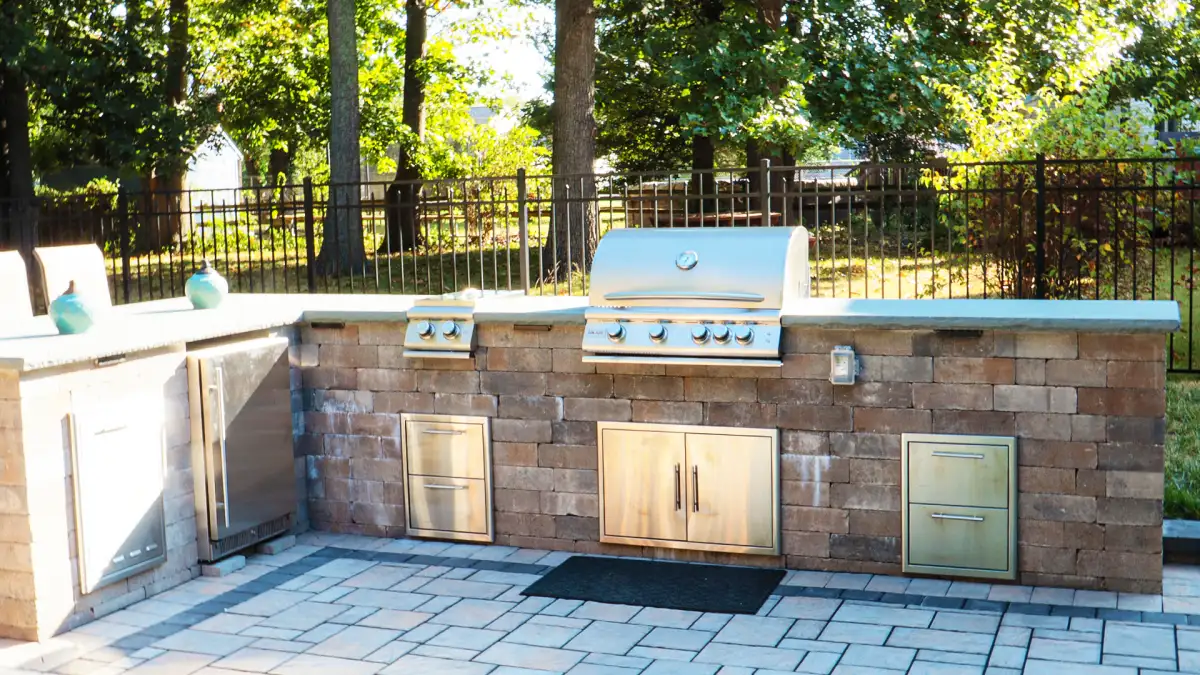
Not every outdoor kitchen requires a $30,000 investment. Modular outdoor kitchen units, which come as pre-built cabinets that bolt together on-site, offer a middle ground between a freestanding grill and a full custom build. These units are available in powder-coated steel or stainless steel and can be configured with grills, side burners, storage, and even sinks.
The main advantage of modular systems is speed of installation. A modular kitchen can be set up in one to two days on an existing patio, compared to one to three weeks for a full custom build. They also offer the flexibility to add sections over time as your budget allows. A starter modular kitchen with a grill, two storage cabinets, and a countertop section costs $4,000 to $10,000.
For South Jersey homeowners on a budget, consider starting with a modular grill station and adding a custom stone bar or fire pit in a later phase. This phased approach lets you enjoy outdoor cooking immediately while building toward a complete outdoor living space over two or three seasons. Even a basic modular setup looks significantly more polished than a standalone grill on the patio.
Permits and Regulations in Gloucester County
Before starting any outdoor kitchen project in South Jersey, understand what your municipality requires. In Gloucester County, building permits are generally required for outdoor kitchens that include any of the following: permanent structures (covered kitchens, pavilions), gas line installation, electrical work, or plumbing connections. Simple grill stations without utilities may not require a permit, but it is worth confirming with your township building department.
Washington Township, Williamstown, and most Gloucester County municipalities follow the Uniform Construction Code of New Jersey. Permit fees typically range from $100 to $500 depending on project scope. Inspections are required for gas, electrical, and structural work. Working with a contractor who is familiar with local codes, as Miller's Landscaping is, streamlines the permitting process and avoids costly delays or rework.
Choosing the Right Materials for NJ Weather
South Jersey's climate presents specific challenges for outdoor kitchen materials. Temperatures swing from single digits in January to the upper 90s in July, with dozens of freeze-thaw cycles each winter. Here is what works best in this environment:
- Countertops: Sealed granite and engineered quartz are the top choices. Both handle freeze-thaw cycling, resist staining, and clean up easily. Avoid tile countertops, as grout lines crack and stain within two to three seasons.
- Base construction: Concrete block with stone veneer is the standard for durability. Cultured stone and natural stone veneers both perform well. Avoid stucco, which cracks in New Jersey winters.
- Patio surface: Interlocking concrete pavers or natural stone (bluestone, flagstone) provide the most durable base. Pavers flex with the ground's seasonal movement rather than cracking like poured concrete.
- Appliances: 304-grade stainless steel minimum. 316-grade (marine-grade) for properties near the coast in Atlantic or Cape May counties.
- Drainage: Every outdoor kitchen in South Jersey needs a drainage plan. Clay soils in much of Gloucester County drain poorly, so a French drain or channel drain along the patio edge is often necessary.
What to Expect: Project Timeline and Next Steps
A typical outdoor kitchen project in South Jersey takes three to six weeks from design to completion, depending on complexity and permit timelines. The best time to start planning is late winter or early spring, which positions your project for completion by May or June, right at the start of outdoor entertaining season.
At Miller's Landscaping, we handle outdoor kitchen projects as part of our design-build process. That means the same team that designs your kitchen layout also handles the paver patio, drainage, gas and electrical coordination, and all finish work. There is no need to hire and manage separate contractors.
We have been building outdoor living spaces across Gloucester, Camden, Salem, Atlantic, Cape May, and Cumberland counties for over seven years, and outdoor kitchens are one of our most requested projects. Every kitchen we build is customized to the homeowner's property, cooking style, and budget.
Plan Your Outdoor Kitchen
Contact Miller's Landscaping for a free on-site consultation. We will walk your backyard, discuss your goals, and provide a detailed estimate with no obligation.
Get a Free Estimate